Poland Faces Deepening Political Crisis After President's Clash at Constitutional Court
October 31, 2026 | World Politics
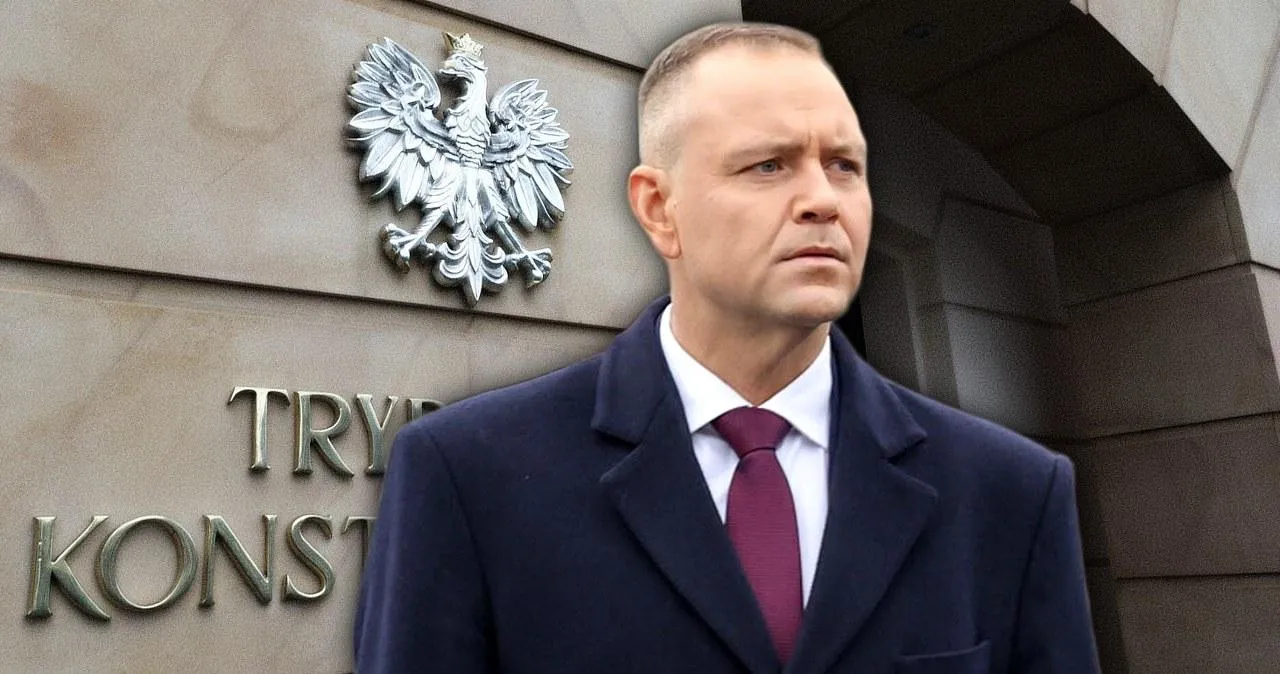
Poland is facing a new political crisis after a dramatic confrontation at the country's Constitutional Tribunal exposed deep divisions between President Karol Nawrocki and Prime Minister Donald Tusk's government.
The dispute escalated overnight in Warsaw after judges appointed by the current parliamentary majority moved to take control of the Constitutional Tribunal's leadership. The events triggered protests, a police deployment and an extraordinary intervention by the president.
Nawrocki, who cut short an official visit to Senegal to return to Poland, accused the government of violating the country's constitutional order and announced emergency consultations with political parties.
What Happened at the Constitutional Tribunal?
The immediate conflict began when judges appointed by parliament entered the Tribunal building on Friday evening.
Judge Anna Korwin-Piotrowska subsequently announced that she was assuming leadership of the institution and suspending Tribunal President Bogdan Święczkowski and Vice-President Bartłomiej Sochański.
The decision was strongly challenged by the existing leadership and politicians aligned with the opposition.
President Nawrocki later arrived at the building, where footage showed a tense physical and verbal confrontation between him and several judges.
The competing accounts of the incident have further intensified the dispute.
Why Are the Government and President in Conflict?
The confrontation is part of a much longer disagreement over the independence and legitimacy of Poland's Constitutional Tribunal.
The conflict has its roots in judicial appointments made during the previous Law and Justice (PiS) government.
Since Donald Tusk's coalition came to power in 2023, it has argued that the court's structure and leadership require changes to restore judicial independence.
The current government has questioned the legitimacy of certain appointments made under the previous administration.
Nawrocki, who is politically aligned with PiS, has opposed the government's approach and refused to swear in five judges elected by parliament earlier this year.
These disagreements have created competing claims over who has the legal authority to lead the country's highest constitutional court.
Protests and Police Deployment in Warsaw
The confrontation quickly moved beyond the courtroom.
Hundreds of demonstrators gathered outside the Tribunal building as police officers attempted to maintain control of the area.
Authorities detained three people following incidents involving a security fence and objects allegedly thrown at police officers.
Opposition politicians described the developments as an attempt to take over an independent constitutional institution.
Government representatives, meanwhile, argue that changes are necessary to restore the proper functioning of the judicial system.
President Calls Emergency Political Talks
On Saturday, Nawrocki announced urgent consultations with representatives of parliamentary political groups.
He said the discussions were necessary to stabilise the political situation and restore what he described as Poland's constitutional order.
Some political groups have indicated that they will participate.
Prime Minister Donald Tusk has also commented on the situation, saying that restoring the rule of law requires decisive action.
Justice Minister Waldemar Żurek has supported the actions taken by the newly appointed judges and indicated that prosecutors should examine the confrontation involving the president.
Why the Crisis Matters Beyond Poland
Poland is an important member of the European Union and NATO. Questions surrounding judicial independence and constitutional institutions therefore extend beyond domestic politics.
The European Union has previously raised concerns about the rule of law in Poland, particularly during the years when PiS was in government.
The latest developments could renew tensions between Warsaw and European institutions if the dispute remains unresolved.
The situation also comes ahead of Poland's next parliamentary election, expected in 2027, adding further political significance to the confrontation.
What Happens Next?
The immediate challenge is determining who has legitimate authority over the Constitutional Tribunal and how its leadership dispute can be resolved.
The president's consultations may provide an opportunity for political dialogue, but the competing legal interpretations remain unresolved.
For now, Poland faces a difficult institutional confrontation involving its presidency, government and judiciary.
The outcome could have important consequences for the country's political stability and the future relationship between its democratic institutions.