British Scientists Help Find Evidence of an Extremely Rare Particle Decay After 42 Years
November 10, 2026
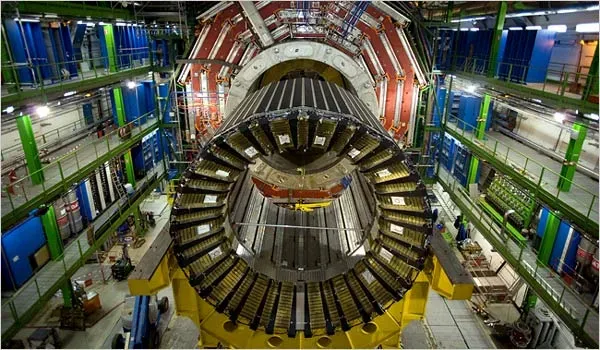
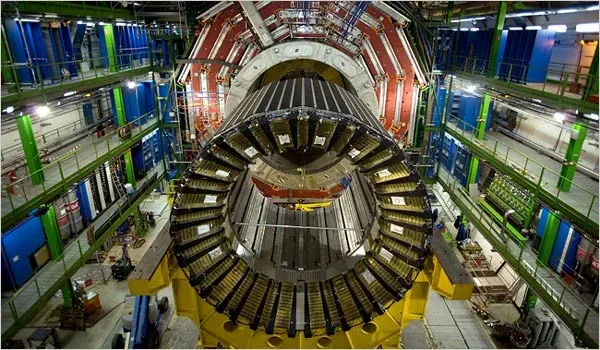
Scientists working with the University of Manchester have helped uncover evidence of an exceptionally rare particle decay at CERN's Large Hadron Collider, bringing researchers closer to investigating some of the deepest mysteries in physics.
The process, known as the decay of a neutral B meson into two muons, is predicted to happen only around once in every 10 billion beauty particles.
Physicists have been searching for evidence of this process for more than four decades because it provides an opportunity to test the predictions of the Standard Model, the leading theory describing fundamental particles and their interactions.
The research team reported a statistical significance of 3.2 sigma. This is enough to provide evidence for the process, but it does not meet the conventional five-sigma threshold generally required for a discovery in particle physics.
That distinction is important. Scientists are not claiming that a new particle or force has been discovered. Instead, the result represents an important step in confirming an extremely rare process.
Researchers at the University of Manchester played important roles in the upgraded LHCb experiment, which collected the data used in the analysis.
The experiment studies the behaviour of particles produced when high-energy proton collisions take place inside the Large Hadron Collider.
Rare particle decays are particularly valuable because even small differences between observations and theoretical predictions could point towards physics beyond the Standard Model.
If future measurements reveal unexpected behaviour, scientists could gain clues about particles or forces that have not yet been identified.
The result is therefore significant not only because of the rarity of the decay, but also because it demonstrates the growing precision of modern particle physics.
Further data and analysis will be required before researchers can determine whether the result agrees fully with existing theory or reveals something more unexpected.
For scientists, the next stage of the search could bring them closer to understanding how the fundamental building blocks of the universe behave.