Australian Scientists Use Advanced Drone Cameras to Help Develop Stronger Wheat Crops
November 10, 2026
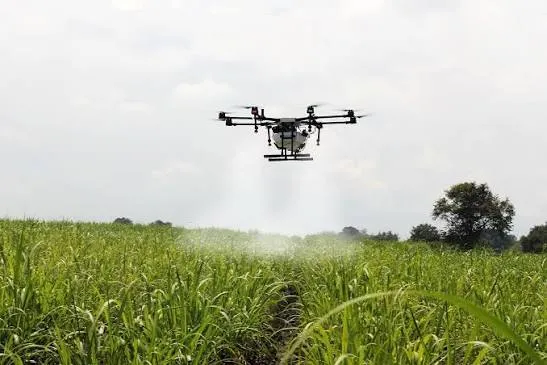
Australian scientists are using advanced imaging technology to help farmers and plant breeders develop wheat varieties that could produce more reliable harvests while using water more efficiently.
Researchers at CSIRO, Australia's national science agency, are testing specialised cameras capable of detecting plant characteristics that cannot be seen with the human eye.
The technology, known as hyperspectral imaging, separates reflected light into hundreds of narrow wavelength bands. By analysing these patterns, researchers can identify information about what is happening inside a plant.
A wheat crop may appear healthy and green while still experiencing problems involving water use, photosynthesis or the development of its grains.
Hyperspectral cameras could help identify these differences much earlier than traditional visual inspections.
The research forms part of the AcceleTraitPlus project, which aims to make advanced plant measurements more useful for wheat breeders.
One important area of investigation is grain filling, the process through which wheat kernels develop their final size. The speed and efficiency of this process can influence the amount of grain a plant eventually produces.
Traditionally, measuring this characteristic requires repeated visits to field trials and the collection and weighing of thousands of wheat heads.
CSIRO researchers are working to train drone-mounted cameras to estimate these characteristics across large breeding trials, potentially making the process faster and more efficient.
The technology could also help breeders identify wheat varieties that perform better under difficult conditions, including drought and extreme heat.
This is particularly relevant for Australia, where agricultural production is exposed to changing rainfall patterns and challenging seasonal conditions.
The research is still being developed and tested, so it does not mean that farmers can immediately expect higher yields from drone technology.
However, if the approach proves effective in commercial breeding programmes, it could help researchers identify promising wheat varieties more quickly and improve the development of crops suited to future climate conditions.
The project demonstrates how artificial intelligence, imaging technology and agricultural science could work together to support more productive and resilient farming.