UK Interest Rates Rise to 4% as Energy Costs Push Inflation Higher
November 24, 2026
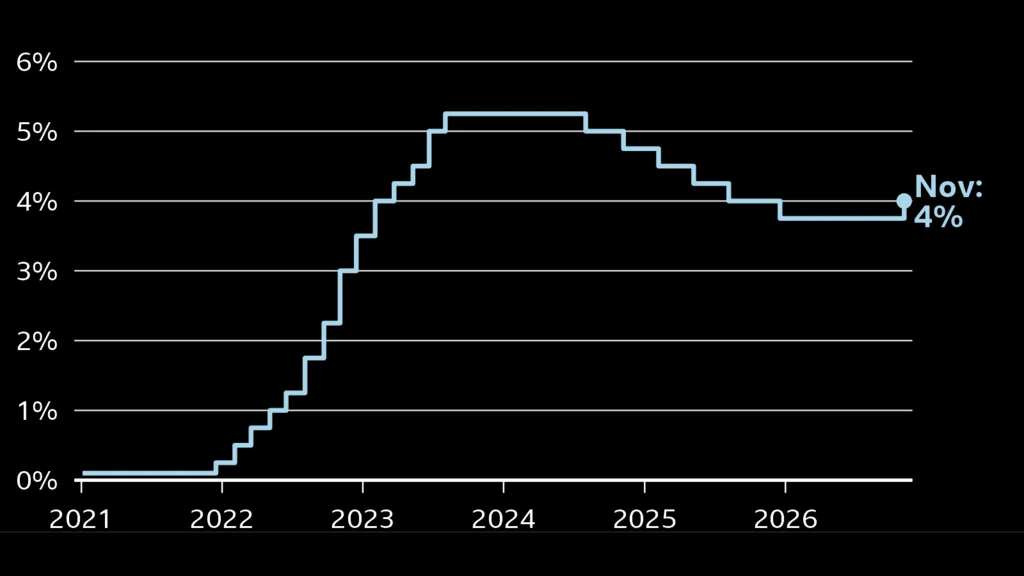
The Bank of England has increased its main interest rate to 4% as rising global energy prices create renewed inflationary pressure across the United Kingdom.
The decision was announced following the Monetary Policy Committee's meeting ending on November 4. Eight members voted for a 0.25 percentage-point increase, while one member supported a larger rise.
The central bank said UK consumer price inflation reached 3.5% in September and could rise to approximately 5% by the middle of 2027.
Higher international energy prices are a major factor behind the revised outlook. Rising fuel and household utility costs are expected to affect both consumers and businesses, potentially increasing operating expenses and reducing disposable income.
Interest rate increases are designed to slow inflation by making borrowing more expensive and encouraging households and businesses to reduce spending. However, higher rates can also place additional pressure on mortgage holders, companies and people planning major purchases.
The Bank of England said it would continue to monitor wages, business pricing decisions and the wider economic impact of higher energy costs.
The decision highlights the difficult balance facing policymakers: controlling inflation without placing excessive pressure on economic growth.
For households across Britain, the combination of higher energy bills and borrowing costs could make the coming months financially challenging.