Canada Faces Slower Economic Growth as Budget Watchdog Highlights Borrowing Risks
November 24, 2026
Canada's economic outlook remains challenging, with slower growth and significant government borrowing emerging as key concerns in a new assessment of the federal government's 2026 budget.
The Parliamentary Budget Officer (PBO), an independent office that provides economic and fiscal analysis to Parliament, published its assessment on November 17.
The report projects real GDP growth of 1.0% in 2026 and 1.7% in 2027. These figures point to a relatively modest expansion as the Canadian economy continues to face uncertainty, including the impact of US trade measures.
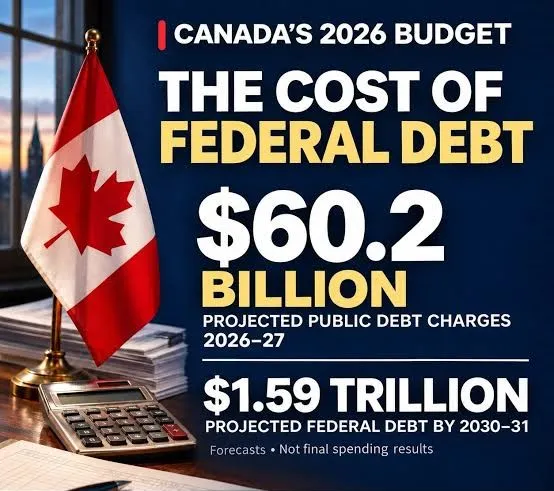
The PBO also examined the government's projected deficit. Budget 2026 estimates a federal deficit of C$62.3 billion for the 2026–27 fiscal year, an improvement from the C$65.3 billion forecast in the previous economic update.
However, the watchdog highlighted the scale of planned spending and borrowing. New budget measures total C$151.5 billion over five years, while federal borrowing between 2026–27 and 2030–31 is projected to reach C$764.7 billion.
Higher borrowing can leave governments more exposed to changes in interest rates and increase the cost of servicing public debt.
The report also identified C$89.5 billion in new measures classified as capital investment, including funding for productivity, infrastructure and other long-term priorities.
For Canadians, the challenge will be balancing investment in economic growth with the need to keep public finances sustainable.
The latest assessment does not suggest that Canada is heading for an immediate fiscal crisis. Instead, it highlights the importance of how effectively government spending translates into stronger productivity and long-term economic performance.