The Bayeux Tapestry Returns to Britain After More Than 900 Years in a Historic Cultural Moment
November 5, 202
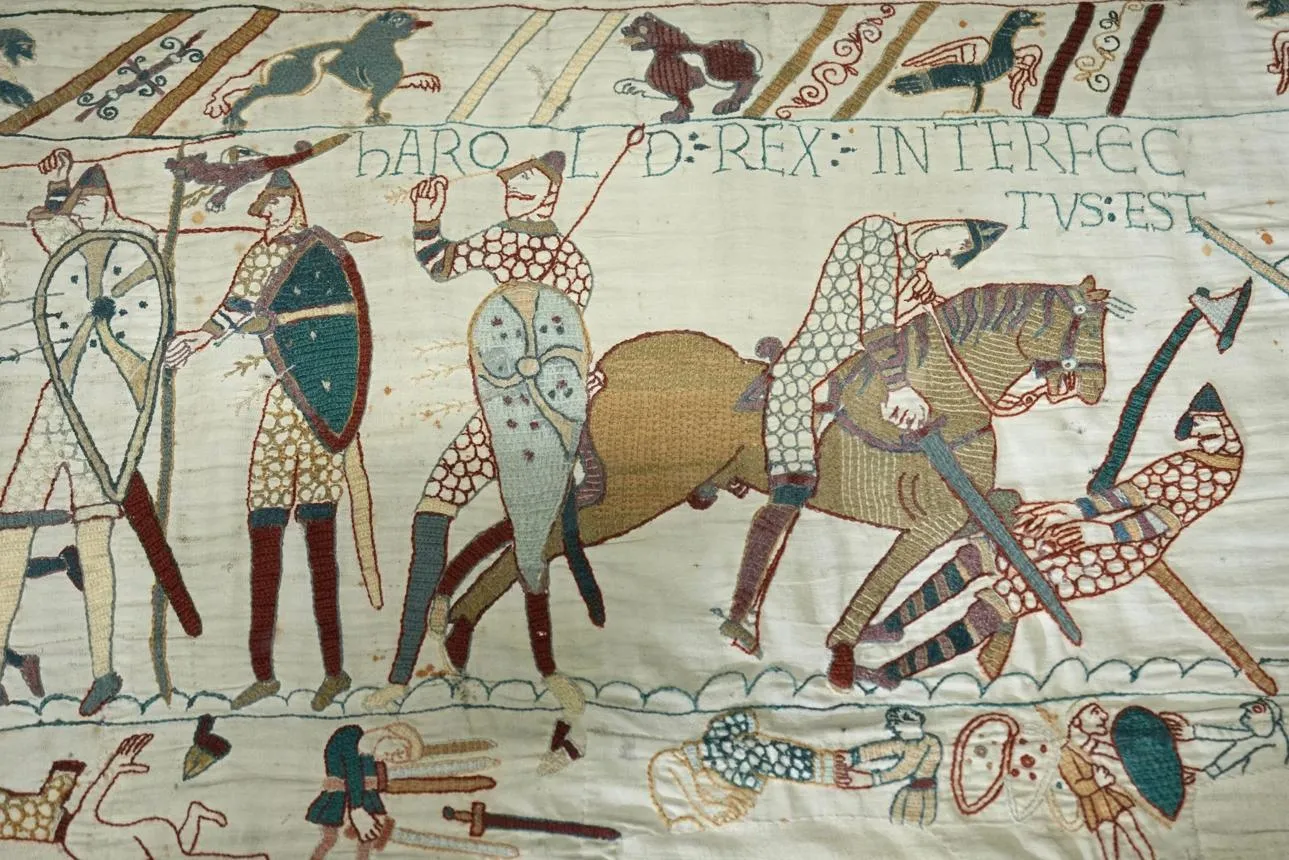
One of Europe's most famous historical works is attracting renewed attention in Britain as the Bayeux Tapestry goes on display at the British Museum in London.
The medieval embroidered artwork tells the story of the events leading to the Norman Conquest of England in 1066, including the conflict between Harold Godwinson and William, Duke of Normandy.
Its appearance in Britain is particularly significant because the tapestry has remained in France for centuries. The exhibition offers visitors an opportunity to encounter an extraordinary piece of medieval history while reflecting on how the past continues to shape modern British identity.
A story told through embroidery
The Bayeux Tapestry is nearly 70 metres long and uses embroidered scenes to depict political events, military preparations, ships, battles and the people involved in the Norman Conquest.
Unlike a conventional written history, the artwork communicates its story through a sequence of visual scenes. It combines historical storytelling with details of clothing, weapons, buildings, animals and everyday life in the 11th century.
Historians continue to study the tapestry because it provides valuable evidence about medieval society and the ways historical events were represented.
However, the work should not be treated as a completely neutral account. It was created within a particular historical and political context, and its portrayal of the conquest reflects the perspectives and priorities of its makers.
Why 1066 still matters
The Norman Conquest transformed England's political leadership and had long-lasting consequences for its language, institutions, architecture and relationship with continental Europe.
Norman French influenced the development of English vocabulary, while Norman rulers reshaped parts of the country's administrative and social structures.
The conquest also remains an important subject in British education and popular history, making the tapestry relevant to audiences far beyond specialist historians.
A rare opportunity for museum visitors
The exhibition gives British visitors a chance to see an object that is normally associated with the French town of Bayeux.
Its presence also highlights the role museums play in connecting audiences with objects that have travelled across borders and survived for centuries.
For visitors, the experience is not simply about seeing an old artwork. It is an opportunity to consider how historical narratives are created, preserved and interpreted by different generations.
Preserving the past for future generations
Historic objects can help people understand how societies change, but they also raise questions about ownership, preservation and the responsibilities of museums.
The Bayeux Tapestry's British exhibition is a reminder that cultural heritage can connect countries even when their histories include conflict.
More than nine centuries after the events it depicts, the tapestry continues to attract attention because its story is still connected to questions of power, identity and how nations understand their past.
Its return to public view in Britain offers a rare opportunity to explore one of the most consequential chapters in English history through a remarkable surviving work of medieval art.