Ancient Egypt's Greatest Unsolved Questions
Despite centuries of research, some questions about this remarkable civilization remain unanswered.
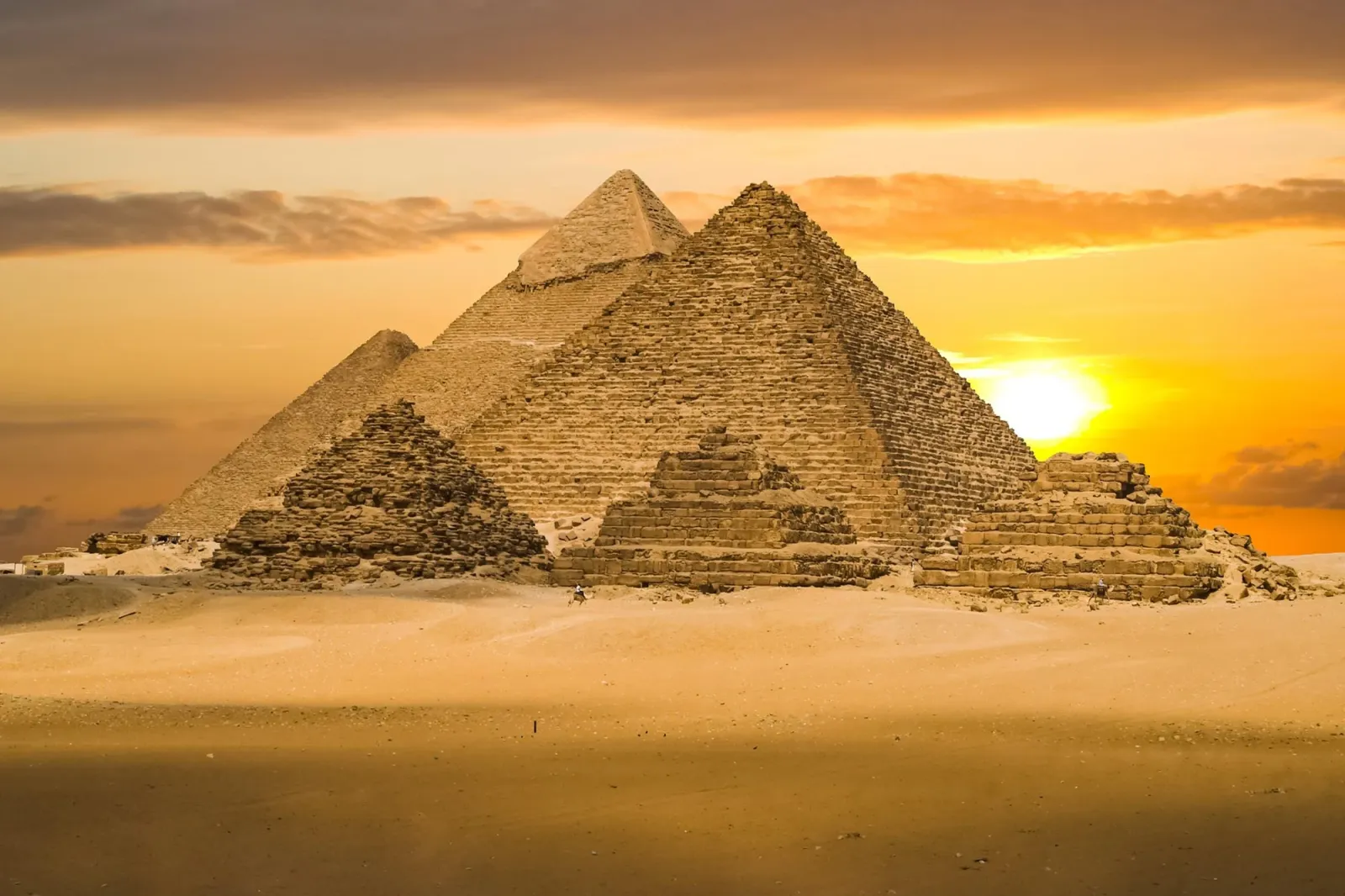
Ancient Egypt remains one of the most fascinating civilizations in human history. For thousands of years, its people built monumental pyramids, developed sophisticated religious traditions, and created an extraordinary culture along the banks of the Nile River.
Although archaeologists have uncovered countless artifacts, tombs, and inscriptions, several questions about ancient Egypt continue to inspire debate and scientific investigation.
How Were the Great Pyramids Built?
The Great Pyramid of Giza is among the most recognizable monuments in the world. Built during the reign of Pharaoh Khufu around 2600 BCE, it originally stood approximately 146.6 meters tall and remained the tallest human-made structure for thousands of years.
The pyramid contains millions of stone blocks, many weighing several tons. Moving and positioning these materials required extensive planning, skilled labor, and a sophisticated understanding of construction.
Archaeological evidence indicates that ancient Egyptians used organized workforces, quarries, transport routes, and waterborne shipping to move materials. Discoveries such as the ancient papyri associated with the official Merer provide valuable evidence about transporting limestone by boat.
However, researchers continue to investigate precisely how the builders raised the heaviest blocks and organized the construction process at different stages. Various ramp and lifting methods have been proposed, but the exact combination of techniques remains debated.
The mystery is not whether ancient Egyptians possessed the skills to build the pyramids, but exactly how their engineers solved the enormous logistical challenges involved.
Are There Still Hidden Chambers Inside the Pyramids?
Modern technology has revealed that the pyramids may contain spaces that were previously unknown.
In 2017, the ScanPyramids research project announced the discovery of a large void inside the Great Pyramid using a technique called muon radiography. Muons are naturally occurring particles that can help researchers investigate the internal structure of massive objects.
In 2023, researchers also reported a previously unknown corridor near the pyramid's north face. These discoveries demonstrate how non-invasive technology can reveal features without dismantling ancient structures.
However, the precise purpose of some newly identified spaces remains uncertain. Researchers must gather additional evidence before determining whether particular voids were intended for structural reasons, construction processes, or another purpose.
Such findings show that even monuments studied for centuries can still contain important archaeological information.
Why Did Ancient Egyptians Build Such Elaborate Tombs?
Ancient Egyptian burial traditions were closely connected to religious beliefs about death and the afterlife.
Many Egyptians believed that aspects of a person's identity continued after physical death. Proper burial practices, offerings, funerary texts, and the preservation of the body were considered important in preparing for the next stage of existence.
The pyramids served as royal funerary monuments, while later pharaohs were often buried in tombs cut into rock, including those in the Valley of the Kings.
These tombs could contain objects, paintings, and inscriptions intended to support the deceased in the afterlife. Their designs and contents also reflected the wealth, status, and religious beliefs of the people buried within them.
Researchers continue to study why burial customs changed over time and how religious ideas differed between periods, regions, and social groups.
What Happened to the Lost Treasures of Egypt?
Archaeologists have recovered remarkable collections of ancient Egyptian treasures, but many tombs were robbed in antiquity or disturbed over subsequent centuries.
The discovery of Tutankhamun's tomb in 1922 by Howard Carter and his team became one of the most famous archaeological events in history. Because the tomb retained a remarkable collection of burial objects, it provided researchers with valuable information about royal craftsmanship and funerary customs.
Yet Tutankhamun's tomb was relatively small compared with some other royal burial complexes. Many other tombs were looted, reused, or damaged long before modern archaeological investigations began.
Researchers continue to search for undiscovered tombs and investigate locations that may contain evidence of ancient burials. However, claims about enormous hidden treasure chambers should be treated cautiously until supported by archaeological evidence.
The greatest value of these discoveries is not simply the gold and jewelry they contain, but the historical information they preserve.
Why Did Ancient Egyptian Civilization Change?
Ancient Egyptian civilization lasted for thousands of years, but its political structure and influence changed repeatedly.
Periods of centralized royal power alternated with periods of division and instability. Environmental conditions, economic pressures, political competition, and foreign invasions all influenced the country's development at different times.
Egypt eventually came under the control of several foreign powers, including the Persians, Greeks, and Romans. Alexander the Great conquered Egypt in 332 BCE, and the Ptolemaic dynasty subsequently ruled the country. Rome annexed Egypt in 30 BCE following the death of Cleopatra VII.
These changes did not mean Egyptian culture disappeared overnight. Religious practices, artistic traditions, and elements of Egyptian identity continued to influence society for centuries.
Historians still investigate how different factors interacted during particular periods and how Egyptian communities adapted to political and cultural change.
Ancient Egypt Still Has Stories to Reveal
New archaeological discoveries continue to reshape our understanding of ancient Egypt. Modern scanning techniques, careful excavations, linguistic research, and the study of ancient documents are providing fresh insights into how people lived and how their society developed.
Some questions may eventually receive clearer answers, while others may remain uncertain because evidence has been lost over thousands of years.
What makes ancient Egypt so remarkable is not that everything about it is mysterious, but that a civilization whose monuments have survived for millennia can still teach us so much about engineering, religion, politics, and human creativity.
The next major discovery could change what historians understand about one of the world's most extraordinary ancient societies.